Sunlight transforms food waste into raw materials
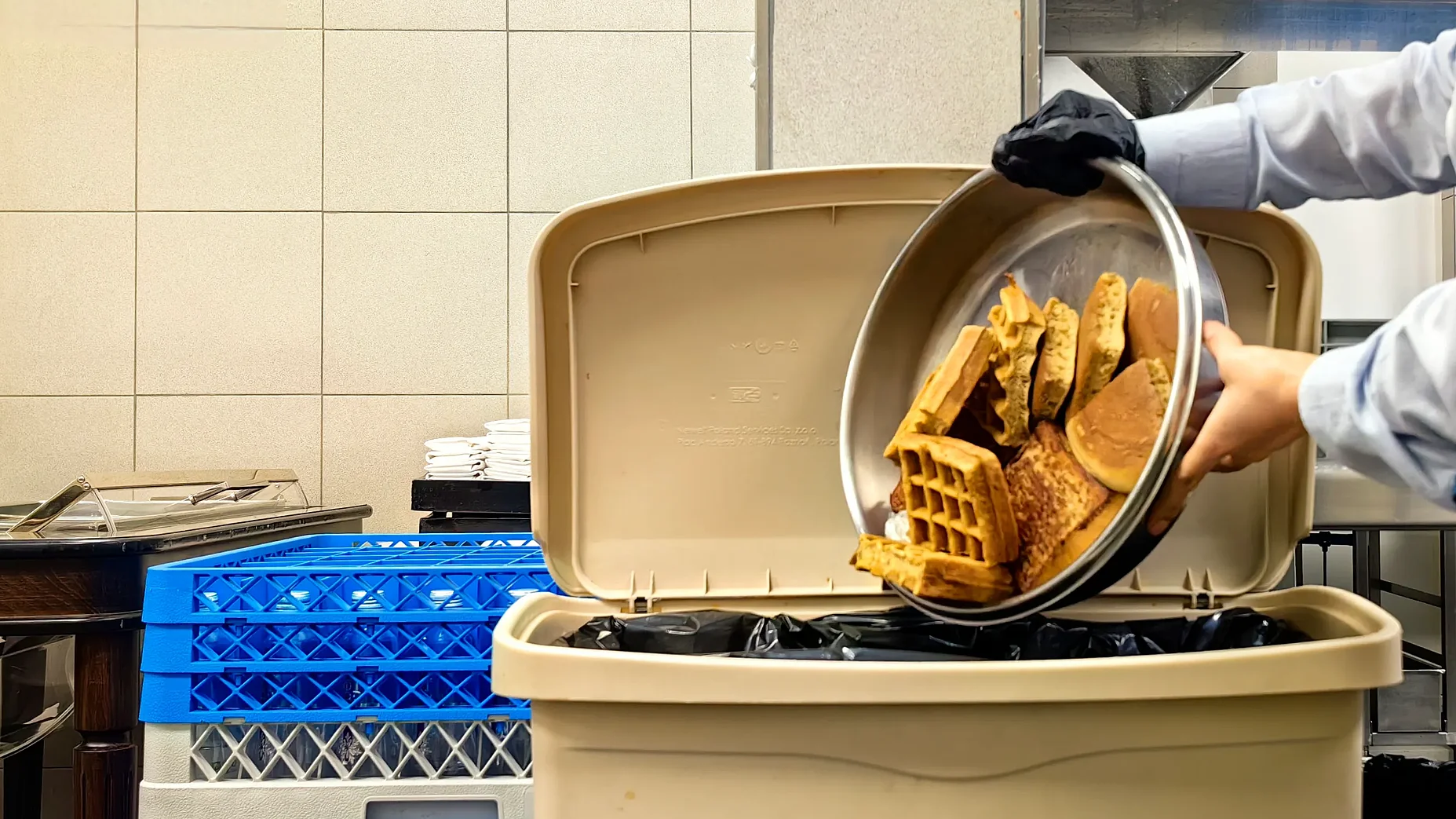
2.5 million euros from the Federal Ministry of Research, Technology and Space (BMFTR) for a CO₂ utilisation project with partners from academia and industry.
The Technical University of Munich (TUM) has received funding approval for a new research project on the innovative use of carbon dioxide (CO₂). The project, titled “Computergestützte Hochdurchsatztestung für das lichtgetriebene Trockenreformieren von Biogas zu Synthesegas (CHATS)”, is funded by the Federal Ministry of Research, Technology and Space (BMFTR) for approximately €2.5 million and includes both academic and industrial partners.
The aim of CHATS is to develop a solar‑driven process for converting biogas into synthesis gas, an important raw material for the chemical industry. Using a coupled thermo‑photocatalytic approach, methane (CH₄) and CO₂ are converted into a mixture of carbon monoxide (CO) and hydrogen (H₂). Synthesis gas is a key intermediate for the production of polymers, fuels, and basic chemicals.
Biogas is commonly produced by fermenting organic waste like food residues. While methane has a particularly high greenhouse gas impact, the fermentation process also produces large quantities of CO₂, which must currently be separated before biogas can be used for heat or electricity generation. This additional processing step reduces overall efficiency.
The CHATS project investigates an alternative approach: instead of separating and releasing carbon dioxide, both methane and CO₂ are chemically upgraded together. The process is driven primarily by solar irradiation, combining photochemical activation with solar heating. The long-term perspective is to enable the chemical use of biogenic CO₂ and to open pathways toward long‑lived carbon‑containing products.
The project is coordinated at TUM by Prof. Helge S. Stein (Professorship of Digital Catalysis) and co-spokesperson Prof. Jennifer Strunk (Chair of Industrial Chemistry and Heterogeneous Catalysis). Additional partners include the Karlsruhe Institute of Technology (KIT), Institute for Technology Assessment and Systems Analysis (ITAS), as well as the companies Dunia Innovations GmbH and Kloh GmbH, which operates a biogas facility processing food waste from regional sources, including university cafeterias.
By linking regional waste streams with solar driven chemical conversion, CHATS contributes to closing material cycles and to the decarbonization of energy and resource-intensive process chains. The project combines fundamental research with applied development and is accompanied by comprehensive techno‑economic and life‑cycle assessments.